
Transformation agency for the AI era
Change is happening.Agitate accordingly.
We work with agencies, media companies and ambitious organisations to redesign how work actually gets done: deciding where AI earns its place, and building the capability to keep going without us.
The change
Everyone can see it moving.Almost nobody knows where to stand.
AI is not arriving as a product you buy. It’s arriving as a change in what work costs, who does it, how fast clients expect it, and which of your advantages still hold.
The leaders we talk to have worked this out already. They’ve read the same articles, run the same trials, and watched a competitor announce something that may or may not be real.
What they don’t have is a spare quarter to figure out where to focus.
What nobody has time to work out
- 01Where to focus first, out of a hundred plausible options
- 02Which opportunities actually matter to this business
- 03How to get from experiments to something in production
- 04How to bring people with you rather than around them
- 05How to redesign a process instead of bolting AI onto it
- 06How to build capability that outlasts the current tools
The adoption gap
Capability compounds. Absorption doesn’t.
Every year the tools can do more. What an organisation can take on, through its people, processes and habits, moves far more slowly. The space between the two lines is where advantage is won or lost.
That gap — between knowing something is happening and knowing what to do on Monday — is the whole of our work.
Who we help
Organisations ready to move, at a scale where it matters.
We do our best work with leadership teams who want to change how the whole organisation works, whether or not they have a transformation team of their own.
Creative & communications businesses
Agencies and studios working out what AI does to production, operations, client service and the commercial model underneath it all.
- Time-based pricing under pressure
- Production work commoditising
- Teams experimenting in private
Media businesses
Publishers and production companies adapting research, content, distribution and the unglamorous internal operations that hold it together.
- Search and referral traffic shifting
- Archive and rights value
- Newsroom capacity
Ambitious organisations ready to change
Leadership teams who want real change, delivered by senior people who do the work themselves. No pyramid of consultants.
- Transformation team stretched or missing
- Tool sprawl
- Ideas outrunning implementation
Sectors are a starting point, not a boundary. If the work is interesting and the organisation is ready to change, we’re interested.
What changes
What’s different six months later.
Not a strategy deck. A short list of things people inside the business would notice.
- 01
Clearer priorities
A short, argued list of where AI is worth the effort — and where it plainly isn’t.
- 02
Redesigned workflows
Processes rebuilt around what’s now possible, rather than automated versions of the old ones.
- 03
Faster execution
Shorter routes from idea to something real, with fewer approval detours in between.
- 04
Less repetitive work
The grinding, low-judgement tasks handled properly, so people spend their time on the rest.
- 05
Internal capability
People who can use the tools well, teach each other, and keep improving after we’ve gone.
- 06
New products and services
Things you can sell that weren’t practical or profitable to build eighteen months ago.
- 07
Better customer experience
Faster answers, sharper work, and fewer places where clients feel the internal friction.
- 08
More confident decisions
A leadership team that can tell hype from leverage without needing a translator.
What we do
Six capabilities. Assembled to fit, not sold as a package.
Most engagements use three or four of these. The labels matter less than the order they happen in.
Discover
01Understand how the organisation actually works — not how the org chart says it does.
- Interviews, observation and a look at where time and money genuinely go.
- Written up plainly enough that people recognise themselves in it.
Prioritise
02Find where AI creates real value, and say no to the rest out loud.
- Opportunities sized against effort, risk and the appetite of the people who’d have to live with them.
- A defensible shortlist beats an exhaustive one.
Redesign
03Rethink workflows, services, roles and operating models around what’s now possible.
- The hard part is rarely the technology. It’s the handoffs, incentives and habits around it.
- We design changes that survive contact with a busy week.
Build
04Prototype and implement the systems, workflows and tools that carry the change.
- Working things, in the hands of the people who’ll use them, early.
- We build what’s genuinely useful and buy the rest.
Enable
05Develop the internal capability so the change doesn’t depend on us.
- Practical training against real work, not generic tool demos.
- We look for the people who’ll carry it on and back them.
Evolve
06Keep testing, measuring and adjusting as the technology moves underneath you.
- A rhythm for reviewing what’s working, retiring what isn’t, and absorbing what’s new.
- Technology changes quickly. Capability compounds.
How we work
Five moves, roughly in this order.
It’s a way of working, not a methodology. Engagements skip steps, loop back, and occasionally stop early because the answer turned out to be simple.
01 — Understand
- 01
Understand
Learn how the business really operates — the work, the workarounds, the bits nobody puts in a process document.
- 02
Find the leverage
Locate the friction that costs the most and the opportunities that would actually move the numbers.
- 03
Prototype
Test the promising ideas in weeks, with real work and real people, instead of writing a large deck about them.
- 04
Implement
Turn what worked into workflows and systems people can rely on when we’re not in the room.
- 05
Embed
Help teams adopt the new way of working and build the internal capability to keep going.
Selected work
What changed, and how we know.
Recent engagements, written up in the same shape so they can be compared. Clients are de-identified. Every figure comes with a note on where it came from, and what we can’t claim is said plainly.
01Creative agency
Hours handed back, with the judgement kept human
An independent creative agency brought AI into daily operations across both of its businesses in three months, and drew a hard line around the judgement its clients pay for.
Read the case study13–16%
of repeatable-task time returned in 90 days, against a 10% target
02Travel & tourism
Enquiries answered in seconds, not minutes
A cruise and travel retailer’s consultants now answer brand-specific enquiries from a governed knowledge assistant their own team runs.
Read the case studySeconds
to answer a brand-specific enquiry, down from minutes, with the source cited
03Next case study
In preparation
A third engagement is being written up in the same format and will appear here once the client has signed it off.
Result to follow
Point of view
What we think, before you ask.
- 01
AI transformation isn’t a software problem.
The tools are the easy part, and getting easier. The work is in how decisions get made, how jobs are shaped, and what a business chooses to stop doing.
- 02
The winners won’t own the most AI tools. They’ll have redesigned the way they work.
Bolting a model onto a broken process gives you a faster broken process, delivered with more confidence.
- 03
Experimentation matters. So does finishing.
Most organisations we meet have plenty of pilots and very little in production. The gap between the two is where the value sits.
- 04
Technology changes quickly. Organisational capability compounds.
Betting on a specific tool is a two-year decision. Betting on people who can evaluate tools is a ten-year one.
Who we are
Three practitioners, three angles on the same problem.
Not a pyramid. The people you meet are the people who do the work — which is why we choose our engagements carefully.
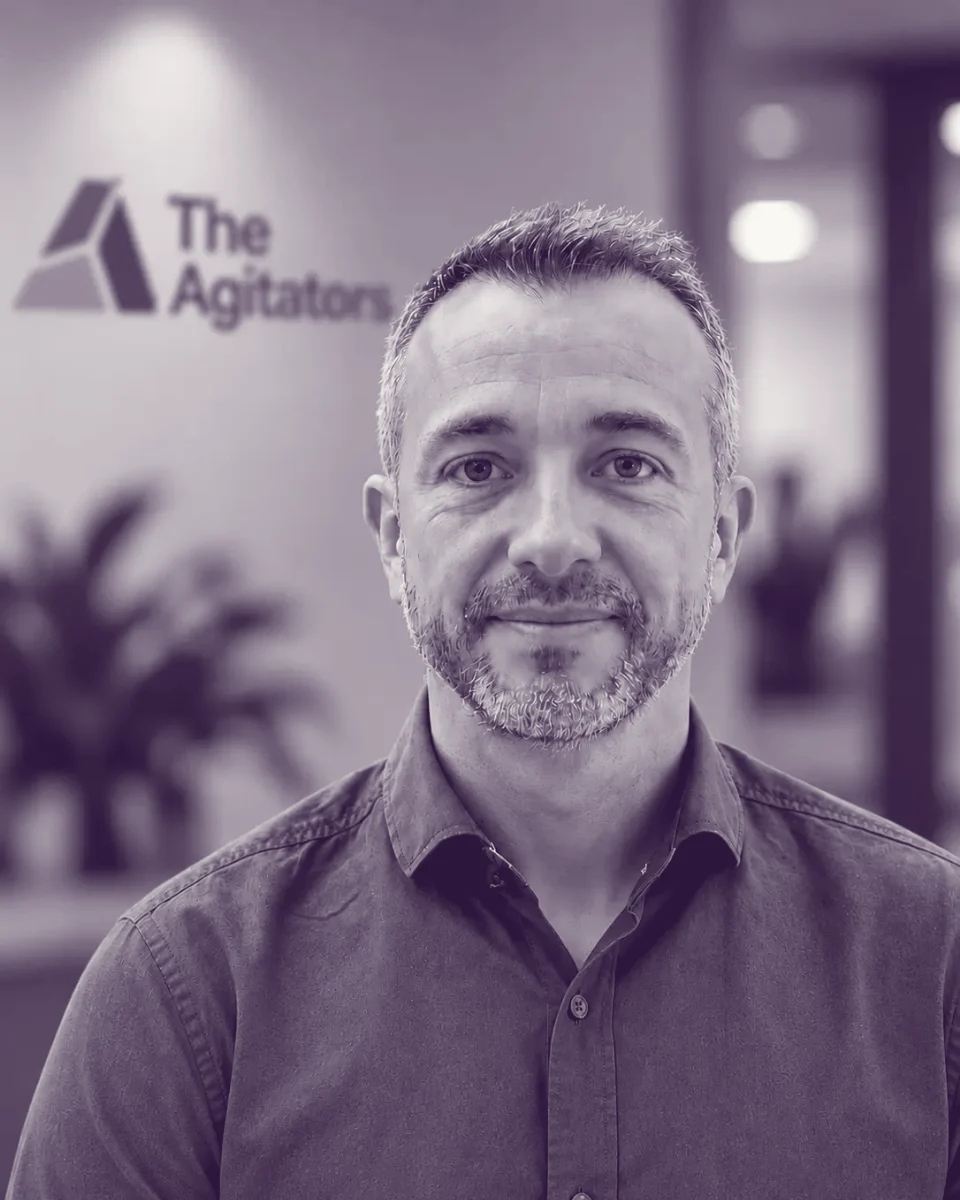
Lee Robson
Co-Founder
A passion for building AI-driven solutions to human problems informed by 25 years with startups and major brands.
- Agency operations
- Client service
- Creative production

James Bridges
Co-Founder
Placeholder bio. A background in media businesses and organisational change, with a habit of asking what a process is actually for before improving it.
- Operating models
- Editorial & content
- Change programmes
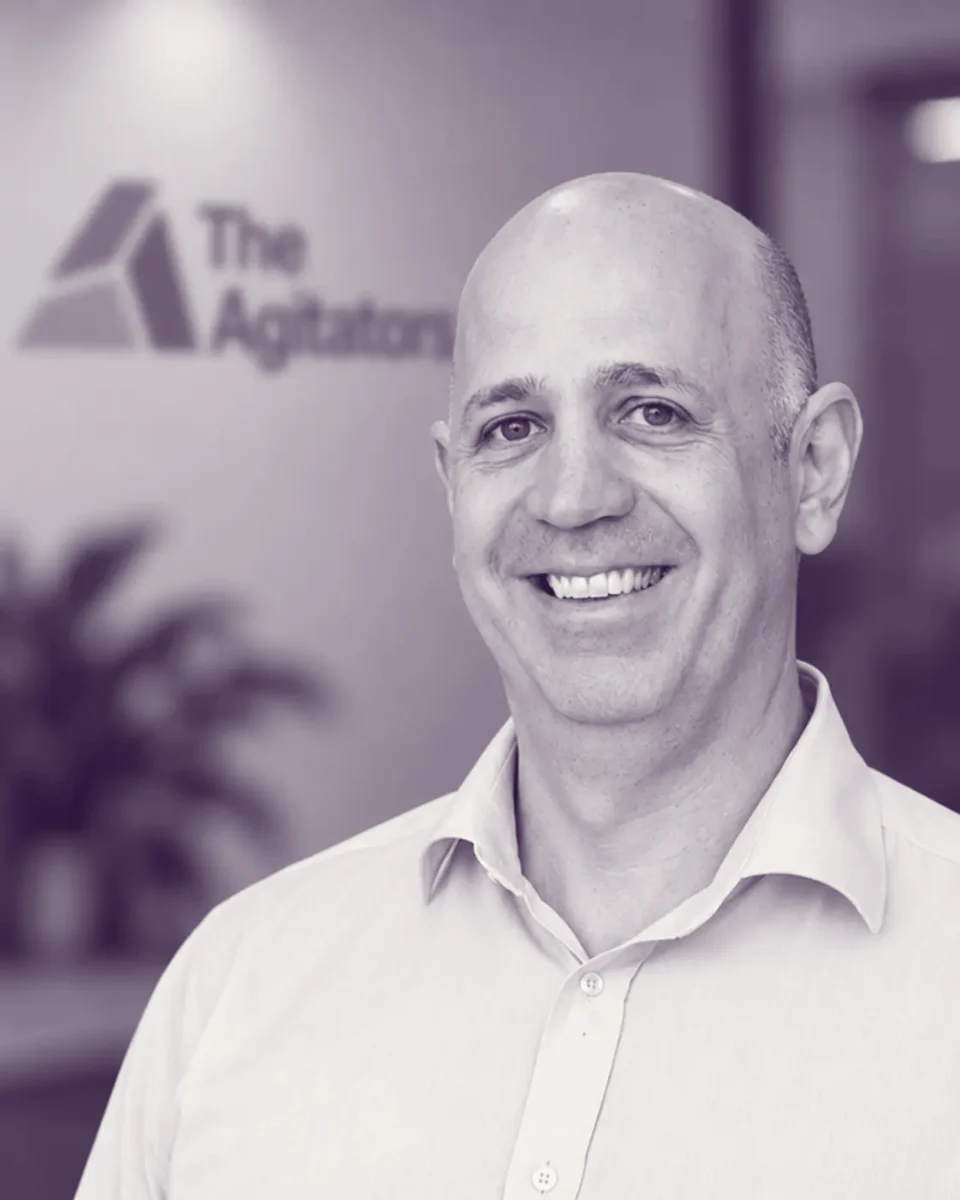
Harris Hutkin
Co-Founder
Placeholder bio. Builds the things. Spends most of the week close enough to the technology to know what it can’t do yet.
- AI strategy
- Prototyping
- Internal tooling
Contact
Something worth changing?
Tell us what’s slow, expensive or stuck. If we’re not the right people, we’ll say so and point you somewhere better.